copy

Sound · Mind · Meaning

Amaç Erdem

one question — six disciplines

01

It fascinated me — so I made it.

At seventeen, I began playing piano on a computer keyboard. I had never taken a single music lesson.
But it fascinated me so completely that I never stopped…

02

What is Music?

For 15 years the question would not leave me.

No satisfying answer from music theory, art, or philosophy.

03

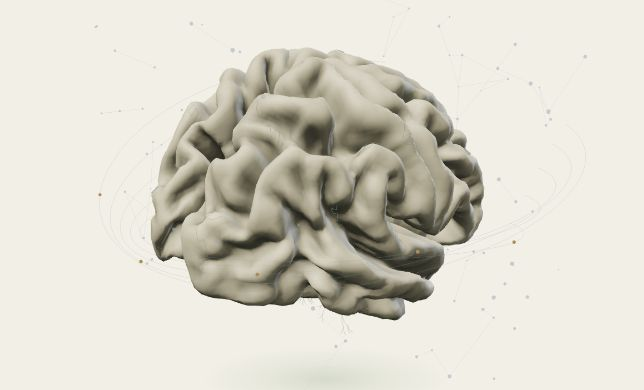
How does the brain process music?

For an answer, a year of reading and research became unavoidable.
Perception, prediction, reward, neurochemistry — twenty-one papers, load-bearing.

01Phil. Trans. R. Soc. B · 360(1456):815–836 · 2005

A theory of cortical responses

K. Friston

Free-energy formulation of perception as approximate Bayesian inference — formalizes precision-weighted prediction errors that drive belief updates throughout cortex. The mathematical scaffold underpinning every Bayesian-update step in MI's F1 cycle.

doi:10.1098/rstb.2005.1622
02Nature Neuroscience · 14(2):257–262 · 2011

Anatomically distinct dopamine release during anticipation and experience of peak emotion to music

V.N. Salimpoor, M. Benovoy, K. Larcher, A. Dagher, R.J. Zatorre

[11C]raclopride PET in 8 listeners: caudate DA release precedes nucleus-accumbens DA release during musical “chills.” The anatomical-temporal dissociation is the load-bearing falsifiable prediction MI re-derives at +0.9 s on 52/56 DEAM tracks.

doi:10.1038/nn.2726
03PNAS · 116(9):3793–3798 · 2019

Dopamine modulates the reward experiences elicited by music

L. Ferreri, E. Mas-Herrero, R.J. Zatorre, P. Ripollés et al.

Within-subject pharmacological design (n=27): levodopa enhanced hedonic ratings and skin conductance; risperidone blunted both — causal evidence for DA in music-evoked reward.

doi:10.1073/pnas.1811878116
04Nature Reviews Neuroscience · 23:287–305 · 2022

Music in the brain

P. Vuust, O.A. Heggli, K.J. Friston, M.L. Kringelbach

Comprehensive review framing music perception as predictive coding across cortical hierarchies. Precision-weighted prediction errors organize melodic, harmonic, and rhythmic processing — the conceptual ground for MI's F2 prediction function.

doi:10.1038/s41583-022-00578-5
05EJNMMI · 52(1):158–169 · 2025

Pleasurable music activates cerebral μ-opioid receptors

V. Putkinen, S. Nazari-Farsani, L. Nummenmaa et al.

[11C]carfentanil PET-fMRI: pleasurable listening shifts μ-opioid binding across cingulate, OFC, NAcc, thalamus — validating MI's OPI channel (7/7 regions).

doi:10.1007/s00259-024-06916-2
06JASA · 38(4):548–560 · 1965

Tonal consonance and critical bandwidth

R. Plomp, W.J.M. Levelt

doi:10.1121/1.1909741
07JASA · 94(3):1218–1228 · 1993

Local consonance and the relationship between timbre and scale

W.A. Sethares

Local consonance curve as sum of dissonance from partial-pair interactions — predicts scale construction from arbitrary inharmonic timbres. R³'s BCH backbone.

doi:10.1121/1.408175
08Nature Communications · 15:1726 · 2024

Timbral effects on consonance disentangle psychoacoustic mechanisms

R. Marjieh, P.M.C. Harrison, H. Lee, F. Deligiannaki, N. Jacoby

N=11,754 dyad ratings across 5 timbral conditions: pure tones show no preference for traditional consonance ratios; complex tones do. Disentangles innate vs. statistical components — the load-bearing Phase 6 anchor for MI's consonance battery.

doi:10.1038/s41467-024-45661-w
09Current Biology · 29(23):4084–4092 · 2019

Uncertainty and surprise jointly predict musical pleasure

V.K.M. Cheung, P.M.C. Harrison, L. Meyer, M.T. Pearce, J.D. Haynes, S. Koelsch

Inverted-U relationship between Bayesian uncertainty × surprise and pleasure ratings. Yields the constants behind MI's F6 reward formula (surprise × resolution).

doi:10.1016/j.cub.2019.09.067
10Topics in Cognitive Science · 4(4):625–652 · 2012

Auditory expectation: the information dynamics of music perception

M.T. Pearce, G.A. Wiggins

doi:10.1111/j.1756-8765.2012.01214.x
11Nature Reviews Neuroscience · 15:170–180 · 2014

Brain correlates of music-evoked emotions

S. Koelsch

Maps emotional response to hippocampus, insula, OFC, mPFC — separates core arousal/valence circuits from refined aesthetic emotion. MI's F5 anatomy reference.

doi:10.1038/nrn3666
12Neuron · 56(3):547–560 · 2007

When the brain plays music: auditory-motor interactions in music perception and production

R.J. Zatorre, J.L. Chen, V.B. Penhune

doi:10.1016/j.neuron.2007.10.038
13NeuroImage · 28(1):175–184 · 2005

The rewards of music listening: response and physiological connectivity of the mesolimbic system

V. Menon, D.J. Levitin

fMRI demonstrating coordinated mesolimbic activation (NAcc, VTA, hypothalamus, amygdala) during pleasurable music listening. Reference for MI's F6 reward network.

doi:10.1016/j.neuroimage.2005.05.053
14Science · 340(6129):216–219 · 2013

Interactions between the nucleus accumbens and auditory cortices predict music reward value

V.N. Salimpoor, I. van den Bosch, N. Kovacevic, A.R. McIntosh, A. Dagher, R.J. Zatorre

doi:10.1126/science.1231059
15Oxford University Press · monograph · 2014

On Repeat: How Music Plays the Mind

E.H. Margulis

Cognitive-science monograph: repeated listening drives parsing, anticipation, and aesthetic depth. Connects repetition to memory consolidation — informs MI's F4 recurrence handling.

ISBN:978-0199990825
16Oxford University Press · monograph · 2008

Music, Language, and the Brain

A.D. Patel

Cross-domain analysis: music and language share processing resources for syntax, rhythm, and prosody. Reference for MI's F3-F4-F5 boundary decisions.

ISBN:978-0195123753
17Nature · 535:547–550 · 2016

Indifference to dissonance in native Amazonians reveals cultural variation in music perception

J.H. McDermott, A.F. Schultz, E.A. Undurraga, R.A. Godoy

Tsimané (Bolivia) listeners show no preference for consonance over dissonance — cultural-statistical origin of consonance preferences; boundary on universalism claims.

doi:10.1038/nature18635
18Hearing Research · 323:1–9 · 2014

Subcortical sources dominate the neuroelectric auditory frequency-following response

G.M. Bidelman

doi:10.1016/j.heares.2014.07.008
19J. Neuroscience · 23(18):7160–7168 · 2003

The statistical structure of human speech sounds predicts musical universals

D.A. Schwartz, C.Q. Howe, D. Purves

doi:10.1523/JNEUROSCI.23-18-07160.2003
20Communications Biology · 3:617 · 2020

Simultaneous consonance in music perception and composition

P.M.C. Harrison, M.T. Pearce

Bayesian psychophysics on inharmonic / stretched-octave stimuli: Western harmony judgments depart from pure ratios; spectral interference dominates. Anti-overfit anchor.

doi:10.1038/s42003-020-01244-1
21Trends Cogn. Sci. · 13(11):492–500 · 2009

Musical sound features & auditory cortical processing

M. Tervaniemi

doi:10.1016/j.tics.2009.08.003
04

Maybe to truly understand it, I should build one.
Build a musical brain.

Starting as a composer with zero technical training in April 2025, an enormous amount of work had to be internalized in 11.5 months.

  1. Computer Science & Software Architecture

    • Python — 756 files, 2.81M lines of code
    • Modular contracts, dataclasses, ABCs, type hints
    • Three-layer pipeline: R³ → H³ → C³
    • Git, frozen SHA pinning, reproducibility audits
  2. Signal Processing & Psychoacoustics

    • DSP — STFT, MFCC, spectral flux, F0 estimation
    • Critical bandwidth models (Plomp-Levelt, Sethares)
    • Roughness, dissonance, harmonic-product spectrum
    • 97-dimensional perceptual feature vector design
  3. Cognitive Neuroscience

    • F1–F8 functional architecture (sensory → learning)
    • 89 mechanisms, 131 beliefs, Bayesian update cycle
    • Predictive coding hierarchies (Vuust 2022)
    • 26D Regional Activation Map, 529 RegionLinks
  4. Neurochemistry

    • Dopamine, Norepinephrine, μ-Opioid, Serotonin dynamics
    • Caudate → NAcc dopamine sequence (Salimpoor 2011)
    • Pharmacological cross-validation (Ferreri 2019)
    • 54 NeuroLink call sites, anatomically grounded
  5. Bayesian Statistics & Validation

    • Precision-weighted Bayesian belief update
    • Hierarchical Benjamini–Hochberg FDR correction
    • Permutation null testing (p<0.0001 anatomy)
    • Bit-exact reproductions across 9-dataset battery
  6. Philosophy of Science

    • Zero-calibration doctrine — 16,191 untuned constants
    • Pre-registration, hypotheses frozen before data
    • Falsifiability — load-bearing, kill-switch predictions
    • 21 papers internalized as mechanisms, not citations
05

Musical Intelligencea system that hears like a mind.

Three layers: R³ perception → H³ memory → C³ cognition.