02 / Orchestra & electronics
Enigma in the Veil
When does a sound cease to reveal where it came from?
From the composer
Programme note.
In Enigma in the Veil, I begin with the recognizability of instrumental sound and gradually draw it into a less certain world. Orchestral materials and electronic transformations occupy the same space. Their meeting becomes the substance of the piece: a sound can retain a trace of its origin even as its surface changes.
The subtitle Eclipse gives this movement an image: one layer moves across another, concealing some features and revealing others. Recorded instruments and synthesized textures reshape resonance, density and motion. The orchestra persists where its outlines become difficult to follow.
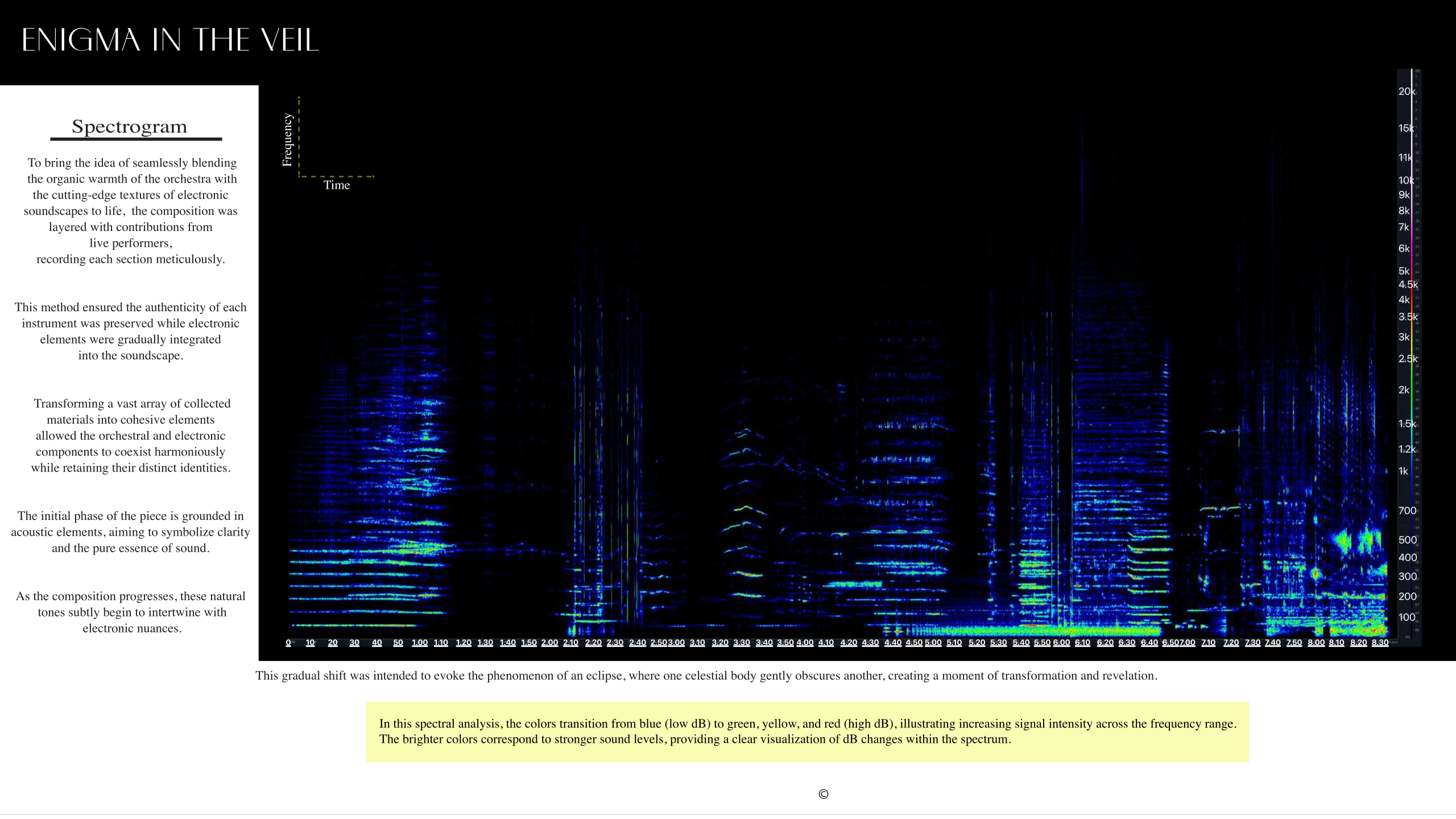
The original portfolio places a spectrogram beside this account. It offers a second way of attending to the work: sustained bands, brief vertical events and crowded regions leave different traces across frequency and time. These traces make the changing material visible while leaving the experience of its continuity open to listening.
I am drawn to the moment when a listener revises an explanation of a sound. A familiar instrument becomes an unfamiliar texture. Recognition itself, including its uncertainties, enters the musical form.
Music, perception & neural representation
What makes a source recognizable?
Enigma separates two questions that can be easy to conflate: how a sound changes, and what a listener thinks produced it. Timbre contributes to source identity, but a description of timbral quality and an identification of a source are different judgements. That distinction gives the acoustic-electronic transition a precise perceptual focus. [1]
Time changes the available evidence. In sound-texture experiments, longer excerpts improved discrimination between texture categories while making different examples of the same texture harder to distinguish. [2] This suggests a useful contrast for Enigma: attending to an individual event or to the texture formed by many events. The piece's changing orchestration would need to be tested in its own right.
Neural evidence adds a further distinction. Pitch and brightness variation produced overlapping auditory-cortical responses, while multivoxel patterns distinguished the conditions in most participants. [3] Such findings motivate questions about representation; a spectrogram alone cannot specify the neural organization of this composition.
Musical Intelligence separates acoustic features, temporal operations and listening-related calculations. [4] I would use that architecture to compare short-lived changes with longer texture summaries, then relate selected outputs to listeners' source judgements and confidence. The first step is an aligned recording and source-track archive. A compact acoustic baseline would establish whether the additional temporal account helps explain when recognition changes.
A prospective connection to Musical Intelligence. The archival spectrogram has not been recomputed here; no source-classification, behavioural or neural results for Enigma are reported.
My Musical Mind · 10 October 2026 · pages 4–6
Read the original presentation↗